Two-hour workshop
A focused CPR/AED workshop designed to teach practical, life saving information and skills in a short session.
Ontario, Canada
CPR and AED advocacy, education, and awareness.
Learn how to respond with confidence in a medical emergency and help save a life.
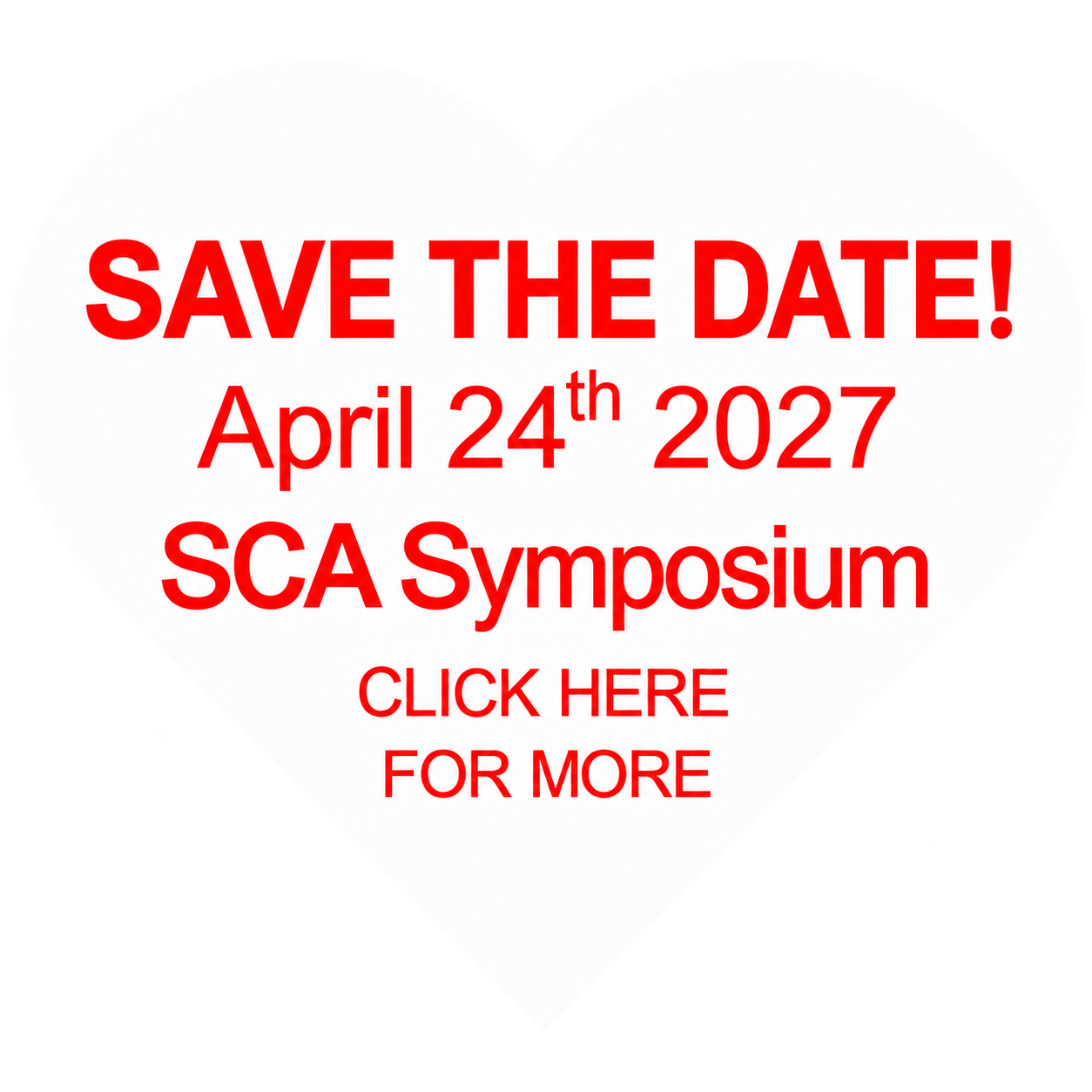
National Symposium
The Restarting Hearts Canada Symposium is a first-of-its-kind national gathering bringing together the broader community of stakeholders committed to improving survival and outcomes following Sudden Cardiac Arrest (SCA) across Canada.
This inaugural symposium will create a national forum for networking, collaboration, knowledge sharing, relationship building, and meaningful dialogue among those working directly or indirectly in the field of sudden cardiac arrest survival.
The symposium will bring together survivors, families, healthcare professionals, researchers, paramedics, first responders, community organizations, educators, government representatives, industry leaders, and advocates from across Canada.
Together, we will explore how we can break down provincial and organizational barriers, share best practices, identify gaps, and develop stronger national collaboration to increase awareness, improve preparedness, strengthen supports, and ultimately save more lives.
The goal is to build a connected national community that is committed to ensuring that more Canadians have the knowledge, confidence, resources, and support needed to respond when sudden cardiac arrest occurs.
CPR/AED Workshop
You can learn this important life saving information in just a few hours.
Anyone, at any age, can learn how to save a life.
Learn at any location with any size group, whether it be at home with friends and family, at the office with your co-workers, or a larger community event.
A focused CPR/AED workshop designed to teach practical, life saving information and skills in a short session.
Participants practise CPR with mannequins and learn how to use a trainer AED.
$55 per person for a two-hour session.
What to know and what to expect when you call 911 for an emergency.
The important difference between a heart attack and sudden cardiac arrest.
How to do CPR, why CPR matters, how an AED works, and how to use it.
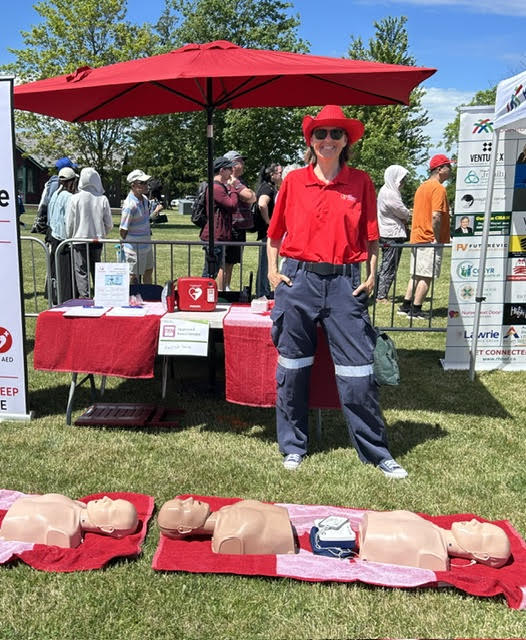
Your instructor, Roberta Scott, worked as an advanced care paramedic with the City of Toronto for 32 years and is now retired.
She has been teaching and facilitating CPR and AED workshops for over 15 years and is the founder of AED Foundation Ontario.
Please contact [email protected] for more information or to book a workshop.
Why it matters
Sudden cardiac arrest can happen to anyone of any age, young or old.
In Ontario, there are approximately 65 cardiac arrests a day.
Survival from sudden cardiac arrest depends on every link in the Chain of Survival.
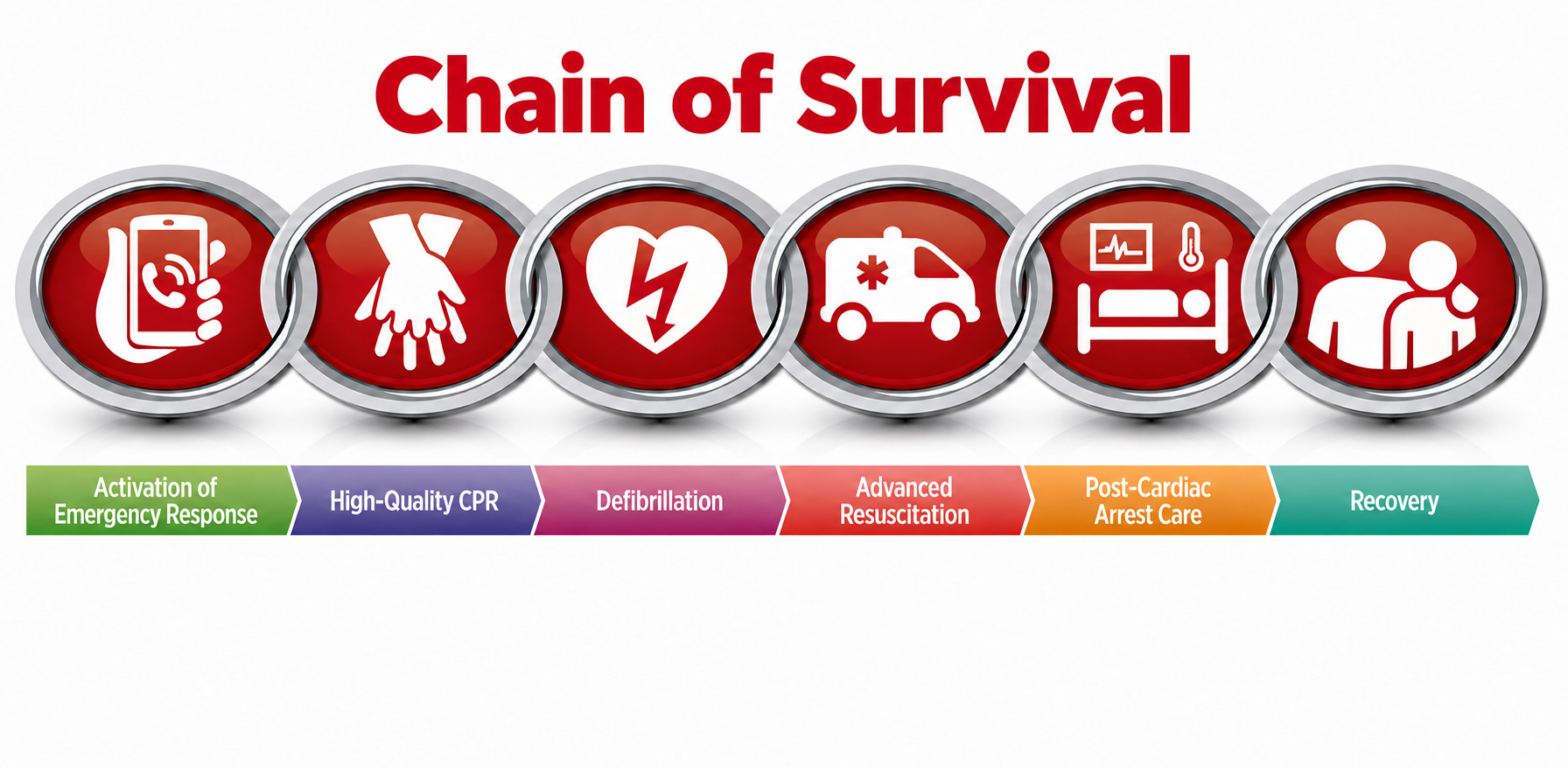
The first step is recognizing an emergency and calling 911 immediately.
Early CPR helps keep blood moving while emergency help is on the way.
Using an AED as soon as possible can dramatically improve the chance of survival.
The first three links are crucial because they depend on the quick actions of bystanders who first witness a person go into cardiac arrest — and that bystander could be you.
Calling 911 immediately, starting CPR, and using an AED for sudden cardiac arrest can increase the person's chances of survival by up to 60%.
Anyone can learn these simple skills in a few hours. They will prepare you to act in a medical emergency and help save a life.
Please watch this video to understand the true value of knowing how to save a life: https://www.youtube.com/watch?v=xU1rCfQ1DWs
Consulting Services
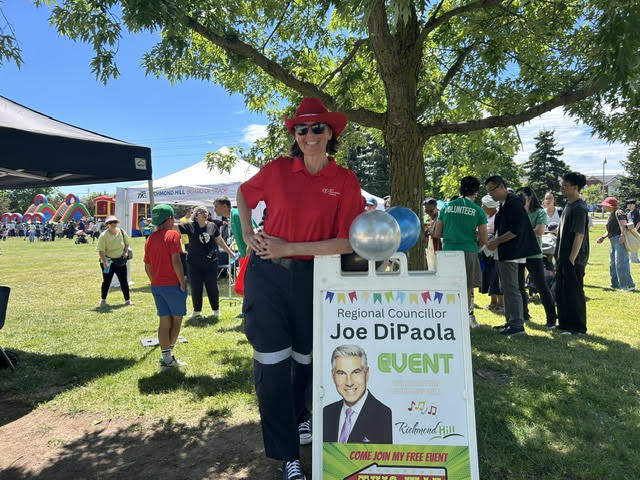
Bring CPR and AED education and awareness to your community, organization, group, region, city, or town.
Restarting Hearts brings expertise to your organization to ensure your staff, members, clients, or customers have the information and skills they need to increase survival and help save a life if someone suffers sudden cardiac arrest.
CPR/AED awareness and education are key to making your organization safer and ready to respond in a medical emergency.
Develop CPR/AED awareness programs, education, information workshops, and packages to fit your organization's needs.
Help your organization become a community leader in workplace safety and medical emergency readiness.
Equip your team with practical information, tools and skills for sudden cardiac arrest response.
Team
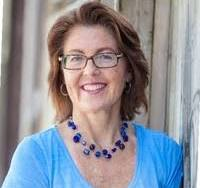
B.A., ACP
Roberta received her Bachelor of Arts Degree in Sociology from the University of Toronto and subsequently graduated from the Centennial College Ambulance program. She worked as an advanced care paramedic for the City of Toronto for 32 years. She has received numerous awards for her volunteer and community work. Some highlights include being awarded the Queen's Diamond Jubilee Medal from the Paramedic Association of Canada in 2012 for distinguished contributions to her community and her profession and the Ontario Paramedic Association Exemplary Service Award in 2016. Most recently she was awarded the King Charles III Coronation Medal, nominated and presented to her by the Honourable Minister of Health Sylvia Jones. Roberta is a past Vice President of the Ontario Paramedic Association and was the PR and Media Director for the Toronto Paramedic Association for over 15 years. In her role with the paramedic association, she was a well known spokesperson for her profession in print media as well as on TV. Roberta has been a CPR and First Aid Instructor for over 10 years. Roberta is a director on the board of AED Foundation Ontario, The non-profit she founded. Roberta has been a leader in CPR and AED advocacy, education, and awareness for decades. She is passionate about increasing community awareness about the life saving importance of CPR and AEDs. Her expertise around increasing survival from sudden cardiac arrest through workshops, events, and her nonprofit work is making an impact across Ontario.
Provincial AED Registry
Roberta worked with various stakeholders in the area of suddian cardiac arrest survival to lobby the Provincial Government for the creation of an AED Registry, established with Bill 141 in 2020.
Roberta is the developer and founder of AED Foundation, the organization acting as the first official AED Registrar for Ontario until March 2027.
A Provincial AED Registry is a major step toward increasing survival from sudden cardiac arrest because public AED locations can be known when someone calls 911.
When AEDs are registered, a 911 call taker can help direct bystanders to the closest available AED during a sudden cardiac arrest emergency.
Restarting Hearts can work with your organization to get AEDs registered and educate staff on how the registry works.
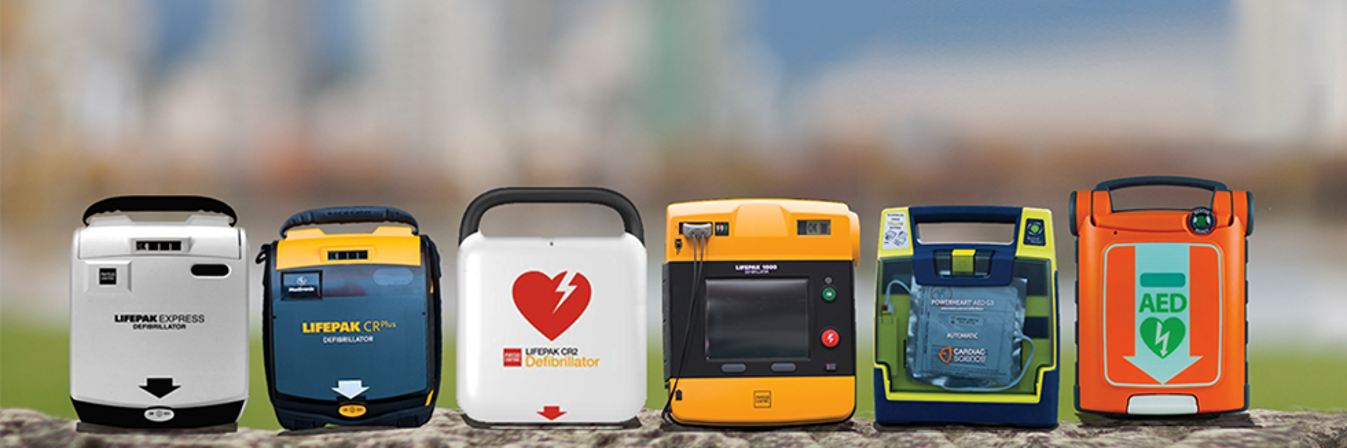
Restarting Hearts can also help your organization understand how to make sure staff are ready to respond in a medical emergency.
Please contact [email protected] for more information about consulting services.
Gallery
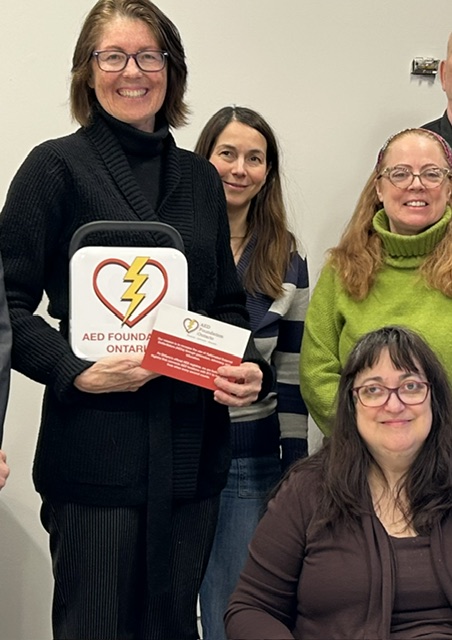
February 2026 - Roberta meeting with (front right) Susan Picarello, Assistant Deputy Minister of Health and her staff to discuss the Provincial AED Registry. Roberta is very proud to be a member of the volunteer group C.A.R.E. that successfully lobbied the Government to establish a Provincial AED Registry.
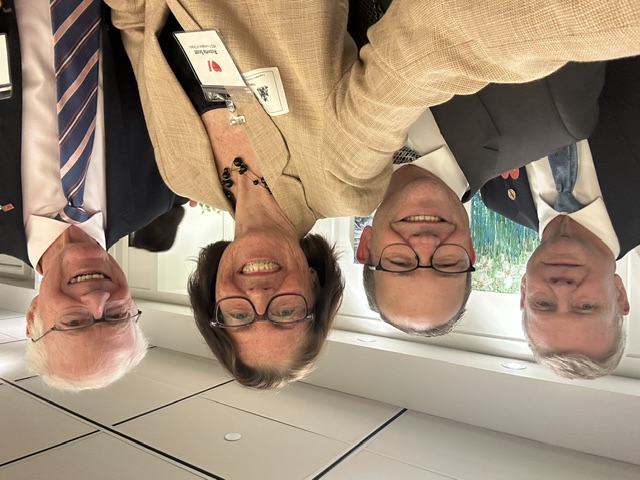
April 2026 at Queens Park - Roberta attended the Heart and Stroke Lobby Day at the Legislature. With her is with (L) MPP John Jordan - P/A to the Minister of Health, Ontario Attorney General the Honourable Doug Downey and (far right) cardiologist and Heart and Stroke advisory board member cardiologist Dr Anthony Graham.
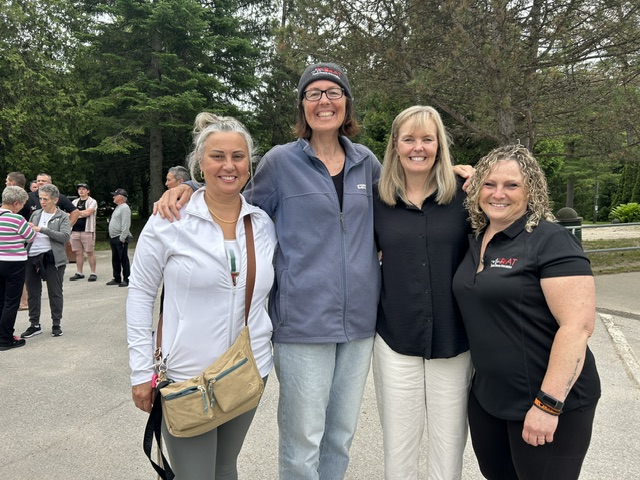
June 17 2026 in Owen Sound - Roberta attended the dedication ceremony for a new outdoor AED in Harrison Park. With her (L) is Karmen Cabral whose 19 year son was saved with CPR and an AED, Deb Hennig who installed the outdoor AED and (far right) Deb Krueger, whose nephew Tyson Downs passed away at the age of 18 due to a sudden cardiac arrest. Deb and her family started the non profit TDBeat in memory of Tyson. They provide free CPR and AED education to youth and sports teams in their community and they helped to donate this outdoor AED.
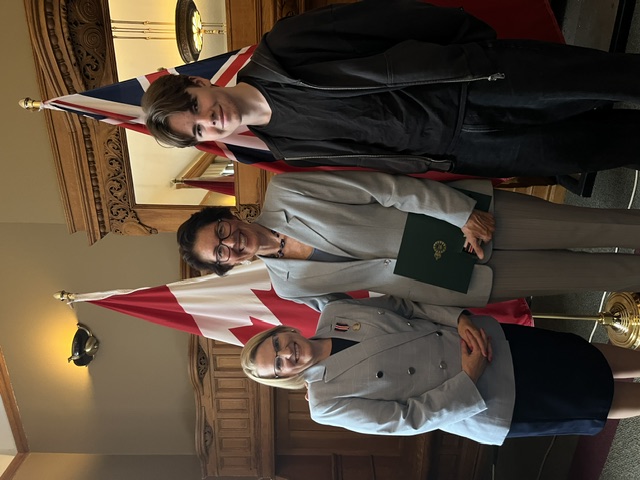
Roberta with her son Jesse and the Honourable Minister of Health Sylvia Jones. The Minister nominated Roberta and then presented her with the King Charles lll Coronation Medal at the Queens Park Awards Ceremony in August 2025. Roberta is extremely proud of this particular award. To receive a King Charles III Coronation Medal, an individual must be nominated by an official partner organization, government official, or member of parliament based on significant community contributions or achievements.
Contact
Contact Restarting Hearts for more information, to book a workshop, or to ask about consulting services and AED registry support.